
Are Beginner Joint Exercises Worth Trying First?

Last Updated: November 4, 2026
Quick Summary
Yes, beginner joint exercises are worth trying first because they are gentle, scalable, and easy to repeat. Low-impact options like walking, stationary cycling, and water-based movement raise your heart rate without stressing sore joints. Starting with short, slow sessions and building up gradually helps joints stay flexible and supported.
Start with a 10-minute walk on flat ground and add a few minutes each week.
Do two strength sessions per week with at least one rest day between them.
Stop any movement that causes sharp pain and try a gentler version instead.
Add only one variable per week, such as minutes, one set, or a harder variation.
Repeat the previous week if soreness is still present at the next session.
Table of Contents
Why Joint Exercises Matter for Beginners Over 30
Starting a new exercise routine after 30 can feel daunting, but joint exercises are one of the most practical places to begin. Ace-1 Warrior provides personalized online and in-person fitness coaching for busy adults aged 30 to 50. Beginner exercises for joint health are a practical first step because they are gentle and scalable. You can read how to rebuild strength after years of inactivity and see why starting again is realistic.
Joints do best when they move regularly. When you sit most of the day, the tissues around your hips, knees, and shoulders can stiffen. Simple, consistent movement helps keep them flexible and supported.
Here is what a good starting point usually looks like:
Low-impact movement that doesn't stress sore joints
Slow, controlled motion through a comfortable range
Short sessions you can repeat most days
Gradual increases in effort over several weeks
Many people who have been inactive for years assume they need to start from zero. That isn't quite true. Most beginners can start with very light movement and build up steadily.
Low-Impact Options: Walking, Cycling, and Water-Based Movement
Low-impact aerobic activities are the easiest entry point for most beginners. They raise your heart rate without pounding your joints.
Walking: Start with 10 minutes on flat ground and add a few minutes each week.
Stationary cycling: The seat supports your weight, which eases pressure on knees and hips.
Water-based movement: Water supports your body, so swimming or water aerobics can feel comfortable even with stiffness.
A common mistake is choosing high-intensity options too early. If an activity causes sharp pain, scale it back and try a gentler version.
Morning Exercises for Stiff Joints: A Gentle Routine
Morning stiffness is common, especially after long periods of sitting or sleeping. A short routine can help loosen things up before the day begins.
Try this simple sequence, holding each movement for a few slow breaths:
Shoulder rolls, 5 forward and 5 backward
Gentle neck tilts, side to side
Seated knee lifts, 8 per leg
Ankle circles, 10 in each direction
Standing hip shifts, 8 per side
Move slowly and stop anything that causes sharp pain. Mild stretching is fine, but it should never feel forced.

Exercises to Strengthen Joints and Ligaments Safely
Strength training supports joints by strengthening the muscles that surround and stabilize them. which is why most physical therapists build a beginner joint program around two to three compound movements rather than a long list of isolation exercises. Pairing these compound movements with mobility exercises for arthritis can help keep strength work focused on supporting stable, comfortable movement.
Start with bodyweight or a light resistance band. Do two sessions per week with at least one rest day between them, and keep each session to 20 to 30 minutes including warm-up.
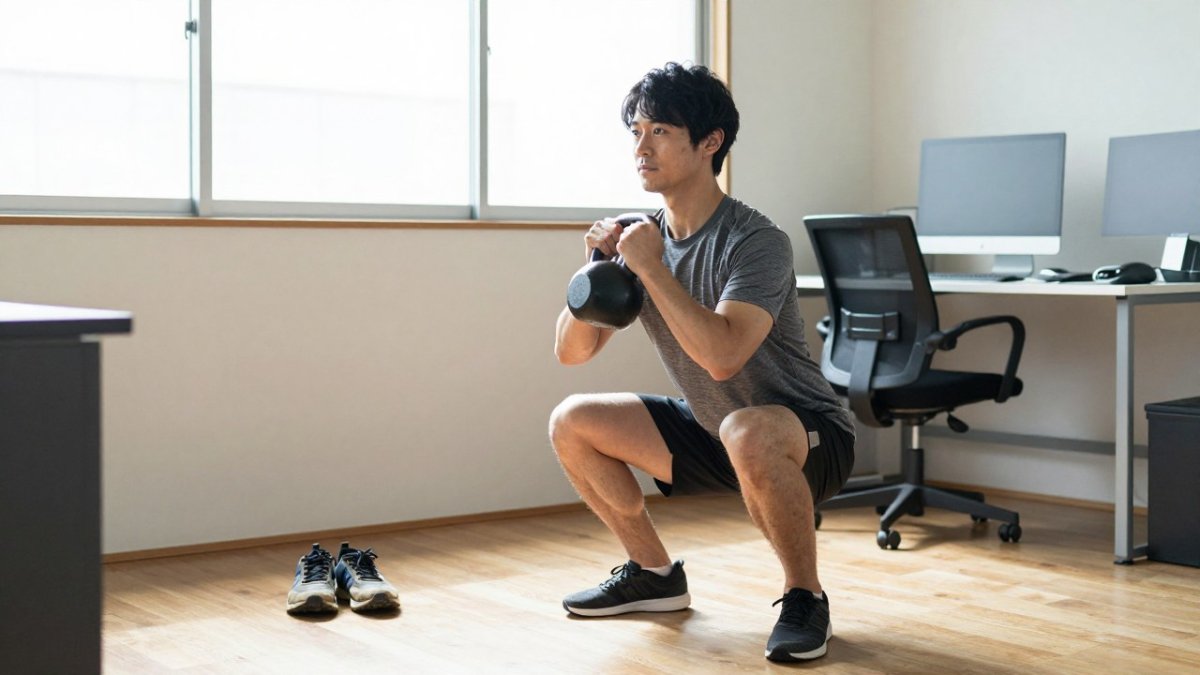
Chair squats (quadriceps, glutes) Stand in front of a sturdy chair with feet shoulder-width apart. Push your hips back first, then bend your knees, and lower until you lightly touch the seat, do not sit down and relax. Drive through your whole foot to stand.
Band rows (upper back, rear shoulders) Anchor a light band at chest height. Stand tall, pull the band toward your lower ribs, and squeeze your shoulder blades together for one second.
Glute bridges (glutes, hamstrings, low back) Lie on your back with knees bent and feet flat, heels about a foot from your glutes. Press through your heels and lift your hips until your body forms a straight line from knees to shoulders.
Step-ups (single-leg strength, balance) Use a step no higher than knee height, a bottom stair is usually right for beginners. Place your whole foot on the step, push through that leg to stand, and step down slowly. Do 8 per leg.
Wall push-ups (chest, shoulders, triceps) Stand arm's length from a wall, hands at shoulder height, and lower your chest toward the wall by bending your elbows to about 45 degrees from your body. Press back to start. Start with 2 sets of 8.
Warm up for five minutes before strength work, walking in place, arm circles, and a few slow bodyweight squats are enough, and cool down with the morning routine above.
Watch out: adding load or reps too fast can aggravate joints. Increase effort gradually and only when your current sets feel manageable. Sharp pain, pain that worsens over successive sessions, or swelling around a joint is a signal to stop and consult a clinician.
Joint Stability Exercises for Hypermobility
Some people have joints that move farther than average. This is called hypermobility, and it calls for a different focus on building control rather than increasing range of motion. For a deeper guide, see stabilization workouts for mobile joints.
Helpful approaches include:
Balance work on one leg while holding a counter
Slow, controlled movements instead of fast or bouncing ones
Exercises that strengthen the muscles around the joint
Avoiding end-range stretches that push joints past comfort
If you have hypermobility or a diagnosed joint condition, talk with a qualified healthcare provider before starting a new program.
A Four-Week Starter Plan With Weekly Progression
This plan gives you a day-by-day structure for four weeks, with a built-in rule for repeating a week when your body needs it. Do not skip ahead even if a week feels easy, the first month is about teaching tissue to tolerate load, not about maximizing effort.
Each session follows the same shape: 5 minutes of warm-up (walking in place, arm circles, slow bodyweight squats), the main work, then 5 minutes of cool-down using the morning routine above.
Week 1, Establish the habit
Day 1: 10-minute walk on flat ground, then the morning routine.
Day 2: Morning routine only. Focus on slow breathing and comfortable range.
Day 3: 10-minute walk, then 1 set each of chair squats (8), band rows (10), and glute bridges (10).
Day 4: Rest or a 5-minute easy walk.
Day 5: 10-minute walk, then the morning routine.
Day 6: 1 set each of wall push-ups (8), step-ups (8 per leg), and glute bridges (10).
Day 7: Rest.
Week 2, Add a little volume
Day 1: 15-minute walk or stationary bike, then the morning routine.
Day 2: 2 sets each of chair squats, band rows, and glute bridges.
Day 3: 15-minute low-impact cardio, then the morning routine.
Day 4: Rest or a 5-minute easy walk.
Day 5: 2 sets each of wall push-ups, step-ups, and glute bridges.
Day 6: 15-minute walk, then the morning routine.
Day 7: Rest.
Week 3, Introduce balance work
Day 1: 20-minute low-impact cardio, then the morning routine.
Day 2: 2 sets each of chair squats, band rows, and glute bridges, plus 3 sets of 20-second single-leg stands holding a counter.
Day 3: 15-minute walk, then the morning routine.
Day 4: Rest or a 5-minute easy walk.
Day 5: 2 sets each of wall push-ups, step-ups, and glute bridges, plus 3 sets of 20-second single-leg stands.
Day 6: 20-minute low-impact cardio of your choice.
Day 7: Rest.
Week 4, Consolidate
Day 1: 25-minute low-impact cardio, then the morning routine.
Day 2: 2 to 3 sets each of chair squats, band rows, and glute bridges, plus balance work.
Day 3: 20-minute walk, then the morning routine.
Day 4: Rest or a 5-minute easy walk.
Day 5: 2 to 3 sets each of wall push-ups, step-ups, and glute bridges, plus balance work.
Day 6: 25-minute low-impact cardio of your choice.
Day 7: Rest.
How to progress without flaring up Add only one variable per week, either a few minutes of cardio, one set, or a slightly harder variation. Never increase duration and resistance in the same week. If a session leaves you with soreness that is still present at the next session, repeat the previous week rather than pushing forward. Repeating a week is a normal part of progressing safely.
When to stop and check in with a clinician Stop the session and seek advice if you feel sharp or stabbing pain, if a joint locks or gives way, if swelling appears within a few hours of exercise, or if pain that was mild at the start of a session is worse at the end. Mild muscle soreness that fades within 48 hours and stiffness that eases as you warm up are expected and not reasons to stop.
Track one line per day, what you did, how the joint felt during, and how it felt the next morning. Over time, patterns can become easier to notice, and you can adjust the plan based on how your body responds.
For a full guided option built for adults over 30, see the Ace-1 Warrior Built After 30 Program.
The four-week plan builds in small steps, so here is a quick view of how each week's load grows.
Week | Main focus | Strength volume |
Week 1 | Establish the habit | 1 set of each exercise |
Week 2 | Add a little volume | 2 sets of each exercise |
Week 3 | Introduce balance work | 2 sets plus 3 balance sets |
Week 4 | Consolidate | 2 to 3 sets plus balance work |
Your Next Step: Booking a Free 10-Minute Call With Ace-1 Warrior
Ace-1 Warrior provides personalized online and in-person coaching for busy adults aged 30 to 50, with a focus on sustainable habits that fit your schedule. Our trainer is 2x NASM Certified, and plans are built around your schedule.
If you are in Toledo, Ohio, you can explore one-on-one personal training in Toledo, OH designed for adults 30 and up. Whether you prefer in-person sessions or nationwide online coaching, the goal is the same: help you move better, feel stronger, and stay consistent.
Ready to take the next step? Book your free 10-minute call and we'll discuss where you are now and what a realistic first month looks like.
Frequently Asked Questions
What is the best exercise to strengthen my joints?
For most beginners, the best starting point is a combination of low-impact aerobic work and controlled strength training. Walking, stationary cycling, and water-based exercise keep stress off the joints while improving circulation. Strength work such as partial squats, seated rows, and step-ups builds the muscles that surround and support the joints. Start with a few sets of light resistance, focus on controlled movement through a comfortable range, and increase load gradually over several weeks. If a movement causes sharp pain or swelling afterward, reduce the range or resistance and check with a physician or physical therapist.
What are the best beginner exercises for joint health?
Good beginner choices include walking on flat ground, stationary cycling at a low resistance, water aerobics, chair-supported squats, seated leg extensions, and gentle mobility work for the hips and shoulders. These options load the joints gently while building the strength and range of motion that help joints stay stable. Aim for two to three sessions per week at a conversational intensity. Pair them with a short warm-up and cool-down to reduce stiffness and make each session easier to sustain.
Should I exercise when my joints hurt?
Mild muscle fatigue or stiffness that eases within a few minutes of moving is usually acceptable. Sharp pain, pain that worsens during activity, swelling, or pain that lingers the next morning is a signal to back off. Stop if pain rises during exercise or persists the next day. Reduce range, resistance, or impact before abandoning the session. Persistent or unexplained joint pain should be evaluated by a healthcare provider before you continue a progressive program.
How often should beginners exercise for joint health?
Consistency tends to matter more than intensity in the first month. Joints generally respond over weeks rather than days, so a slow, steady increase in frequency and load is a sensible approach. Track how your joints feel the morning after each session. If stiffness and pain stay stable or improve over two to three weeks, you can add a fourth session or a small increase in resistance.


Comments