
9 Best 20 Minute Strength Workouts for Parents

Last Updated: November 5, 2026
Quick Summary
The best 20 minute strength workouts for parents are short, structured circuits built around compound moves like squats, lunges, push-ups and rows. Bodyweight routines need no equipment, a single pair of dumbbells opens up more exercises, and four-week progressions with pause-and-resume rules keep training consistent around childcare.
Pick a small set of compound movements and move through them with minimal rest.
Bodyweight circuits need only a mat-sized space and no equipment.
Rest 30 seconds between rounds in the bodyweight leg and glute circuit.
Progress one variable per week: tempo, reps, rest, or load, not all at once.
If an interruption happens, finish the current round and count the partial session.
Table of Contents
Most parents assume a real strength workout needs an hour, a gym membership and a sitter. Short, consistent training can say otherwise, and Ace-1 Warrior has built its coaching around that idea for busy adults aged 30 to 50. Below, we share our picks for the best 20 minute strength workouts for parents, along with the no-equipment and dumbbell options, a weekly schedule, and how to keep going when childcare disrupts the plan.
Why 20 Minutes Is Enough for Strength Training as a Parent
For most parents, the problem is not motivation. It is finding a block of time that does not exist. A 20-minute session is short enough to fit around bedtime, a nap or an early morning, yet long enough to challenge the major muscle groups when the work is structured.
The key is intensity and organization. Pick a small set of compound movements, such as squats, lunges, push-ups and rows, and move through them with minimal rest.
Watch out: long, unfocused sessions can cost you time without adding much effort. Scrolling between sets quietly eats the time you were trying to protect.
Best 20 Minute Strength Workout No Equipment Options
If you have no dumbbells, your body is enough. Bodyweight training suits beginners and returning exercisers, and you can progress it by slowing the tempo, adding pauses or reducing rest. The routines below are built for a living room, a bedroom or a hallway, no rack, bench or dedicated workout area required.

How to Set Up a Small Space Safely
Clear a rectangle roughly the size of a yoga mat plus arm's reach on each side. Move coffee tables, toys and rugs with curled edges out of the way. If you are on hardwood or tile, use a mat or a folded towel under your hands and knees. Keep a wall or sturdy sofa within arm's reach for balance support during split squats and single-leg work.
Watch out: a couch or coffee table that shifts when you lean on it is not a safe balance aid, test it with a light push before you load it.
Bodyweight Circuit for Legs and Glutes
Lower-body work supports the strength needed for daily tasks like lifting a child or climbing stairs. Set a timer for 20 minutes and repeat this circuit as many times as you can with good form:
Bodyweight squats, 12 reps
Split squats, 8 reps per leg (hold a wall or sofa for balance if needed)
Glute bridges, 15 reps
Wall sits, 30 seconds
Rest 30 seconds between rounds. Once the circuit feels manageable, slow the lowering phase of each squat to three seconds, then add a two-second pause at the bottom. When 12 reps feel easy, progress to 15 rather than adding a new exercise.
Floor-Based Core and Upper Body Routine
A floor-based session suits a living room rug and needs no equipment. It also keeps you close to the house if a child wakes up. Work through three rounds of:
Push-ups or incline push-ups against a sofa, 8 to 12 reps
Plank holds, 20 to 30 seconds
Bird dogs, 8 reps per side
Superman holds, 15 to 20 seconds
Rest 45 seconds between rounds. If a full plank is too much, drop to your knees or do a plank from a countertop. If push-ups from the floor are not yet comfortable, the incline version against a sofa is the right starting point, most beginners can do more reps and better reps at an incline. Starting with incline push-ups and modified planks makes it easier to build strength consistently, while efficient gym alternatives can keep a short workout practical when home space or equipment is limited.
No-Equipment Full-Body Option for Tight Spaces
When you want one session that hits everything without gear, alternate upper and lower movements so one muscle group rests while another works. Complete four rounds:
Squat to overhead reach, 10 reps
Reverse lunge, 8 reps per leg
Incline push-up, 8 to 10 reps
Glute bridge, 12 reps
Dead bug, 6 reps per side
Rest 60 seconds between rounds. This format fits in a hallway because every movement stays within a mat-sized footprint, no walking lunges or broad jumps that need runway space.
Progressing Without Weights
When bodyweight work stops feeling challenging, change one variable at a time: slow the tempo, add a pause, reduce rest, or increase reps by two to three per set. Do not change all four in the same week.
20 Minute Dumbbell Workout for Beginners at Home
A single pair of adjustable dumbbells opens up more exercises. For beginners, choose a weight that lets you finish each set with two or three reps left in the tank.
Our suggested structure:
Warm up for three minutes with marching and arm circles.
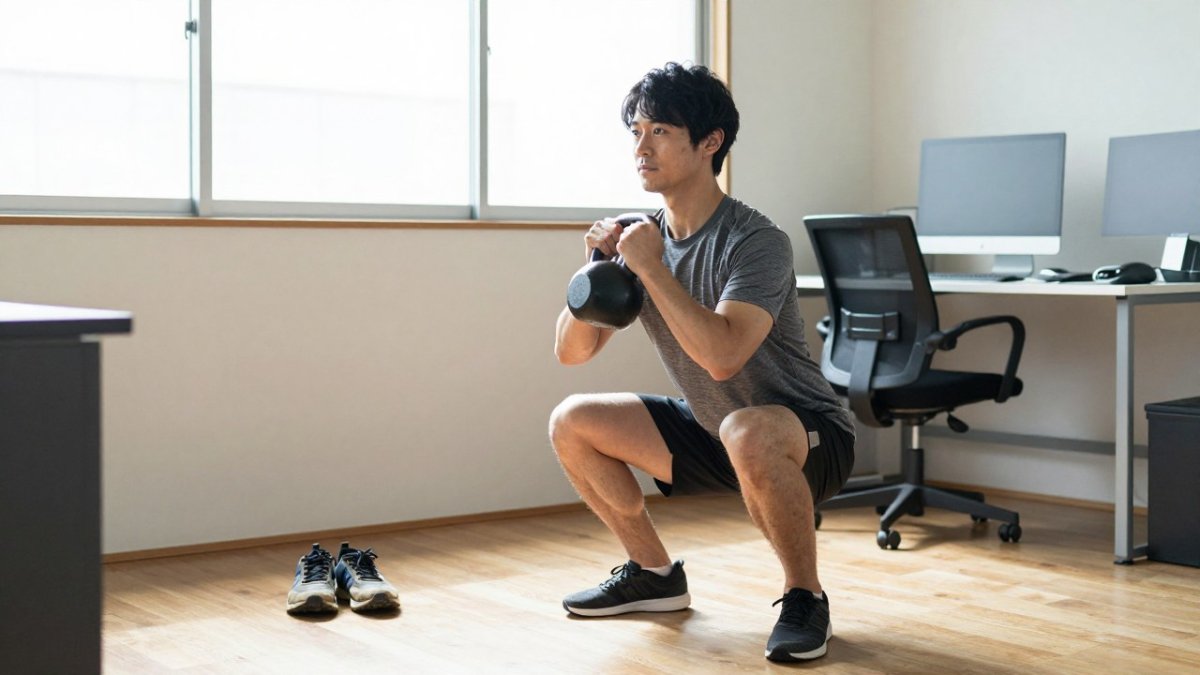
Goblet squats, 3 sets of 10 reps.
Dumbbell rows, 3 sets of 10 reps per arm.
Dumbbell shoulder presses, 3 sets of 8 to 10 reps.
Romanian deadlifts, 3 sets of 10 reps.
Finish with a two-minute core circuit.
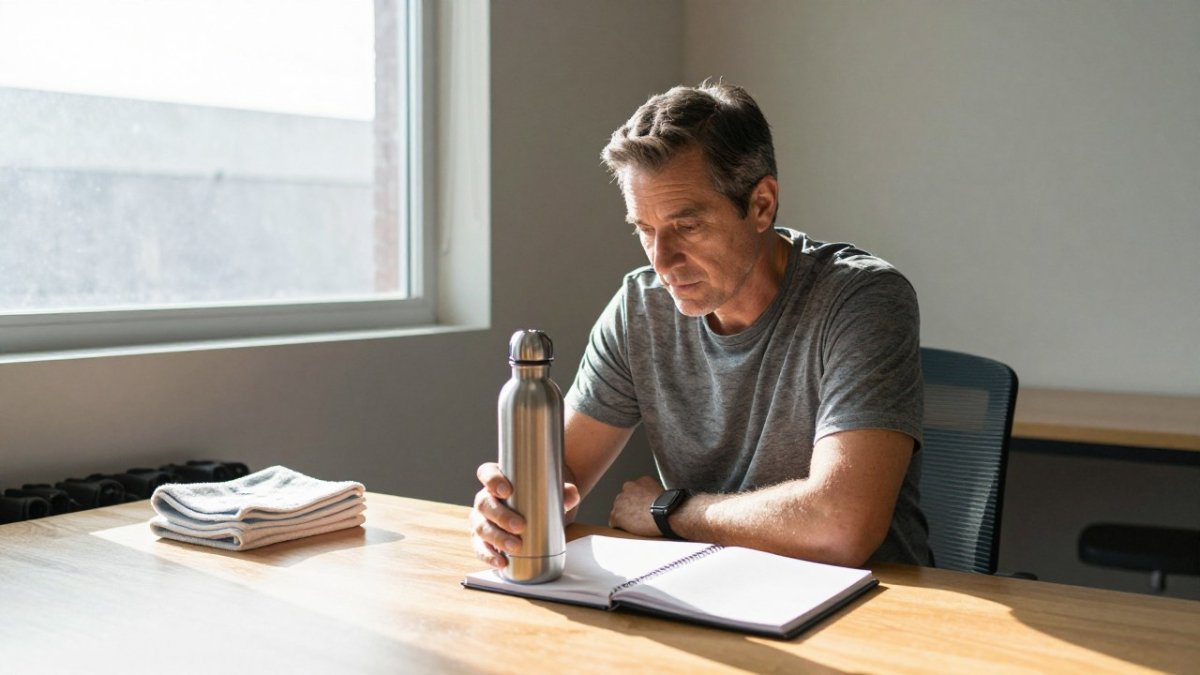
Rest 45 to 60 seconds between sets. Track the weight and reps you use each week so you can see progress, which is often the thing that keeps beginners going.
20 Minute Full Body Workout With Weights for Beginners
When you want one session that hits everything, a full-body format is the most efficient choice. Alternate upper and lower exercises so one muscle group rests while another works.
Follow this sequence with a light dumbbell or a band:
Squat to press, 10 reps
Deadlift to row, 10 reps
Lunge with overhead reach, 8 reps per leg
Push-up or incline push-up, 8 to 10 reps
Complete the sequence four times.
Parent and Child Workout Ideas That Keep Kids Safe and Engaged
Some parents do better when the kids are part of the routine. This works best for children old enough to follow simple instructions and stay within sight. Keep the focus on play, not performance.
Useful ideas include:
Bodyweight squats where the child copies you or counts reps aloud.
Wheelbarrow walks or bear crawls on a soft surface for older children with supervision.
Partner-style reach-and-balance holds, with the child holding a steady object.
Keep any weights out of children's reach, clear the floor of hazards, and stop as soon as a child loses interest or gets hurt. Adult strength sets are still for the adult.
How to Progress and Fit Sessions Around Childcare Interruptions
Interruptions are normal. A sick child, a late meeting or a travel week will disrupt even a well-built plan. What matters is what you do next, and how you structure the session so an interruption does not erase the work you already did.
Pause-and-Resume Rules for Real Interruptions
Treat a 20-minute session as a series of short blocks rather than one unbreakable unit. If a child needs you mid-set, stop, handle it, and return to the start of the next set rather than trying to finish the abandoned one.
A practical pattern parents can use:
Short block (5-8 minutes): one circuit round or one superset pair.
Medium block (10-15 minutes): two or three rounds with rest built in.
Full block (20 minutes): the complete session as written.
Keep a minimum routine you can do in a hallway if necessary, bodyweight squats, incline push-ups, glute bridges and a plank need no equipment and little floor space beyond a mat.
Watch out: doubling up on missed sessions to "catch up" can turn a small interruption into a longer layoff, do the next scheduled session instead.
A Four-Week Progression Schedule
Instead of repeating the same workout indefinitely, rotate through the routines in this article and progress one variable per week:
Week 1: No-equipment bodyweight circuit, three sessions. Focus on form and finishing all rounds.
Week 2: Same circuit, add two reps per set or slow the lowering phase to three seconds. Three sessions.
Week 3: Dumbbell beginner workout, three sessions. Choose a weight that leaves two or three reps in reserve.
Week 4: Full-body workout with weights, three sessions. Alternate upper and lower movements.
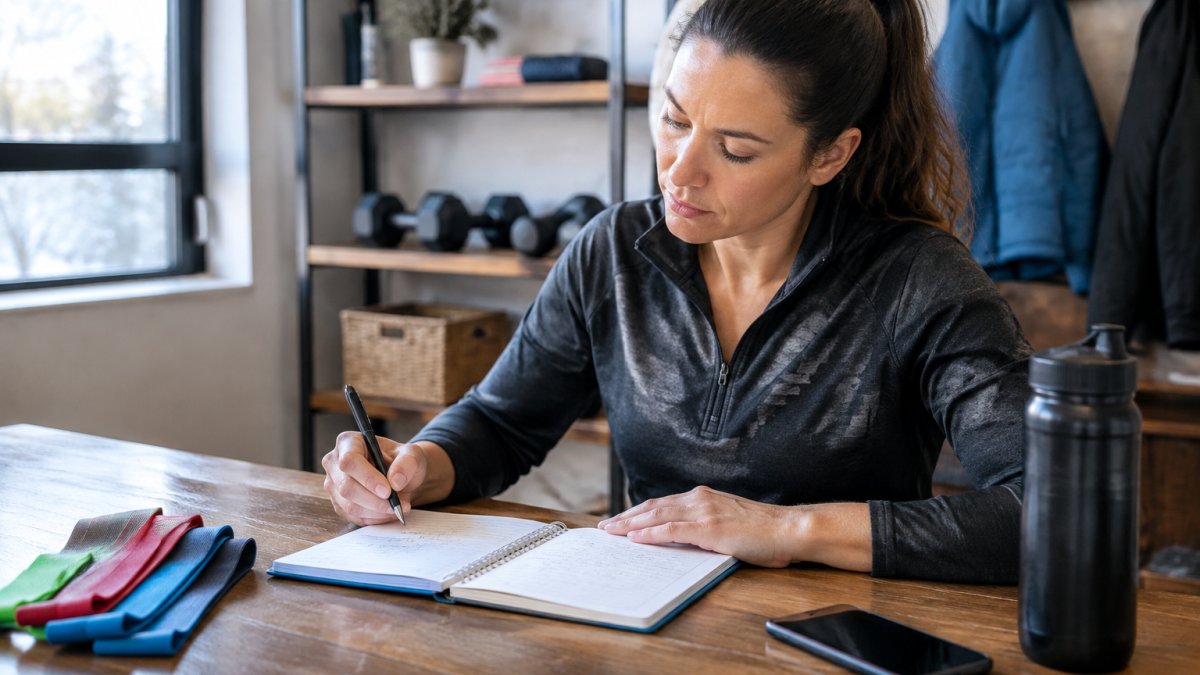
After four weeks, repeat the cycle with slightly heavier dumbbells or higher rep targets. Track weight, reps and rest in a notes app so progress is visible.
Choosing the Right Routine for Your Week
Use this quick decision guide rather than defaulting to the same session every time:
No equipment and limited space: bodyweight circuit or the no-equipment full-body option.
One pair of dumbbells: the beginner dumbbell workout.
One session to hit everything: the full-body workout with weights.
Very short window (under 10 minutes): one circuit round plus a core finisher.
Returning after a break or postpartum: start with bodyweight and incline variations, keep sessions to two or three per week, and progress one variable at a time.
When to Seek Clinician Advice
Parents returning to exercise after pregnancy or a long layoff should watch for pelvic-floor symptoms such as leaking, heaviness or pain during or after sessions. A common pattern is to push through these symptoms and then lose weeks to recovery. If symptoms appear, scale back to bodyweight and shorter sessions, and check with a clinician before progressing loads. This article is general guidance, not medical advice.
For more structured support in a schedule like this, our online coaching program adjusts plans around real weeks, and our article on 9 online fitness coaching options for busy parents compares the choices available.
Here is a quick reference for choosing a routine based on your equipment and available time.
Situation | Best routine | Note |
No equipment, limited space | Bodyweight circuit or no-equipment full-body option | Mat-sized footprint is enough |
One pair of dumbbells | Beginner dumbbell workout | Leave two or three reps in reserve |
One session to hit everything | Full-body workout with weights | Alternate upper and lower movements |
Under 10 minutes | One circuit round plus a core finisher | A partial session still counts |
Returning after a break or postpartum | Bodyweight and incline variations | Two or three sessions per week, progress one variable at a time |
Booking Your Free 10 Minute Call to Build a Plan That Fits Your Week
Knowing which workout to do is only part of it. The harder part is building a routine that survives your actual calendar. If you want help setting that up, our 1-on-1 personal training in Toledo, Ohio program is designed for adults over 30 who are rebuilding strength after years of putting family first.
Start with a 10 minute consult form and we will talk through your schedule, your current fitness and what realistic progress looks like for you. It takes about ten minutes and there is no pressure to commit.
BOOK YOUR FREE 10 MINUTE CALL
Frequently Asked Questions
Can a 20-minute strength workout be effective?
Yes, when the workout is consistent and the effort is real. Twenty minutes is enough to work the major muscle groups if you move through compound exercises such as squats, lunges, push-ups and rows with short rest periods. Consistent training and gradual progression over several weeks are what drive improvement.
Can I do a 20 minute strength workout with no equipment?
Yes. Bodyweight exercises such as squats, reverse lunges, glute bridges, push-ups, incline push-ups on a counter, and planks build real strength. Choose a set of five to six movements, perform them in a circuit with 30 to 45 seconds of work and 15 to 20 seconds of rest, and repeat the circuit. Progress by slowing the lowering phase, adding reps, or shortening rest periods. A sturdy chair or the edge of a bed can stand in for bench-based moves.
How many days a week should beginners do strength training?
Beginners often start with two to three full-body strength sessions per week, with at least one rest day between them. Three 20-minute sessions per week is a realistic target for busy parents and leaves room for recovery. If your schedule only allows two sessions, keep them and do not add extra days to make up for missed ones. Consistency over several months matters far more than frequency in the first few weeks.
Comments